

Articles
How I work and why
I spent decades with more than thirty chronic symptoms and conditions, and I’ve mostly overcome them. At my worst I couldn’t walk, and my life got very small.
In this article
I still have the odd flare-up, and I know how to work with it now.
Healing myself meant getting fascinated by how pain works, close to obsessed, and staying that way for years. What I found still amazes me. Chronic pain can change, and the path is surprisingly simple. Simple, though, isn’t the same as easy. That gap is where I come in: I help people walk that path.
I see my chronic pain coaching as a two-step process. First, I get to know your nervous system, we build some trust, and I help you find regulation. Then, once that’s steady enough, we do the processing work. Skip the first step and the second one doesn’t land. Worse, it can knock you backwards. I won’t do that.
What is regulation?
Regulation is what it feels like when your nervous system isn’t stuck on protect. When you’re not in fight or flight, that sympathetic state where your body is braced, vigilant, ready for threat. For some people, that settled feeling is familiar. For a lot of people I work with, it isn’t. You may not have truly felt it in decades, because you’ve been in that protective mode for so long that it just feels like normal.
That’s why this comes first. Healing happens from regulation. Repair and immune function get funded by the nervous system, and that doesn’t happen well in permanent fight or flight. And you’re too scared to heal. In a very real way, healing is letting your guard down, including the bracing and the tension. You can’t do that while you’re terrified.
So I aim to show you windows of regulation, a taste of what life is like when you’re not terrified, and we normalise that feeling if it’s scary.
Step one: get to know you, then learn to regulate
The first job is to understand what it’s like to be you. Where are you stuck? Which parts of your body are you in touch with, and which aren’t you? How does your nervous system talk to you? How much of that do you notice, and how do you feel about it? I’m also trying to forge a relationship of trust. I’ve lived this, so I know the territory from the inside. You need to feel that I get it, and that you’re safe with me, before anything else is going to move.
Then I teach regulation. You need to be able to regulate, ideally yourself, enough that we can go into processing without tipping you over. If you can’t even feel what regulation is, healing can’t really happen yet. We start with co-regulation, me helping your system settle in the session, and we work toward self-regulation at home. Once that’s in place, that’s step one.
Sessions follow this. Some are regulation sessions, and some are processing sessions. Sometimes there’s no point doing ninety minutes of processing, because you’re not there yet. That phase can last a week or two, or many months. It takes what it takes. If we skip it, the work can’t get done, and we risk retraumatising you. I won’t mindlessly apply a protocol.
Regulation looks different for everyone. You’re in that protective state because your world felt unsafe. Your body is trying to protect you, and it’s doing a great job. Triggers are personal, built from whatever happened to you. Take meditation. For some people it’s lovely. For others, sitting still with your eyes closed is objectively terrifying. Maybe you’ve spent years being the person who stays alert so nothing gets missed, and going quiet feels like leaving your post. Or maybe lying down is the hard part, because that’s when symptoms get louder. Or maybe someone once told you to visualise a calm place, and all you got was the inside of your eyelids, and a sense that you were doing it wrong. If you have aphantasia, like I do, or you just don’t think in pictures, that isn’t a failure. You were handed a tool built for a different brain. We work that out here. This work is for everyone. Aphantasia is one thread, not the whole approach.
This stage is detective work. We’re looking for a safe way into your unconscious, a way to convince your nervous system, a little at a time, that it can relax. Me being a safe person helps. If stillness isn’t it, maybe movement is. The aim isn’t to stop your thoughts. It’s to stop your attention being hijacked. Attention on the breath, on a movement, on a sound, on a sensation: that’s training attention, and that’s the way into those windows of regulation. When you’ve had a few of those windows, in sessions and at home, then we know we’re not going to retraumatise you. Then we can talk about step two.
Step two: processing, once it’s safe
Processing looks different for everyone too. Sometimes we just expand the practice that got you regulated, and that alone starts to retrain things. Pain often goes first. It’s often your nervous system screaming after it’s been whispering for years. Once the system feels safer, that alarm can quieten sooner than you’d think.
The deeper patterns usually take longer. Tension and bracing, those early body reactions probably from childhood, are often the original patterns, and we tend to undo them in the order they arrived. That work might be parts work, like Internal Family Systems, if that lands for you. It might be Pain Reprocessing Therapy. If you can visualise your inner world, we can use that. If you can’t, we won’t. The modality is a tool. We get to know each other, proceed carefully, and pick the right tools for you. They’ll evolve as your skills evolve.
That’s why this is coaching. It covers many modalities, from habit work to movement, attention training and parts work, and every plan is custom. Even two people with the same symptoms won’t get the same plan. It can sit alongside any care you already have.
The tools I reach for
I start with you, then reach for what’s useful.
Pain Reprocessing Therapy, or PRT, teaches the brain to read sensations as safe, mainly through somatic tracking. In one randomised trial, sixty-six percent of people were pain-free or nearly so after four weeks of PRT. That’s Ashar and colleagues, JAMA Psychiatry, 2022. I adapt the usual imagery-heavy scripts: eyes open, anchored in the room, sensations in plain words.
Emotional Awareness and Expression Therapy, or EAET, helps you notice, name and express feelings that may be feeding the alarm. In a 2024 trial with older veterans, sixty-three percent of people in EAET had at least a thirty percent drop in pain, versus seventeen percent in cognitive behavioural therapy. That’s Yarns and colleagues, JAMA Network Open. I often use it alongside PRT.
Clinical Somatics is gentle, slow movement for releasing muscles held tight out of habit. I trained in it at the Somatic Movement Center, Levels one and two, in 2023 and 2024. It needs no imagery. Egoscue is posture work and simple exercises for when pain seems linked to how you stand, sit and move. Tai Chi is slow, flowing movement I use as a regulation practice and a bridge into everyday life, with no visualisation required.
For emotions and protective patterns, I draw on Hakomi-informed and parts-informed work, including Internal Family Systems, but only when you’re ready. And because I can’t use mental images, I lean on breath, sound, touch, and the room around you. Being told to visualise has become a trigger for a lot of people. We get that. Helping you unlearn that is part of the work.
Where to start
If this sounds like it might fit, the easiest next step is a free, no-pressure consultation. It’s a thirty-minute call where we talk about where you are and whether this approach makes sense for you.
This article describes my coaching approach and isn’t medical advice, diagnosis or treatment.
We've been where you are.
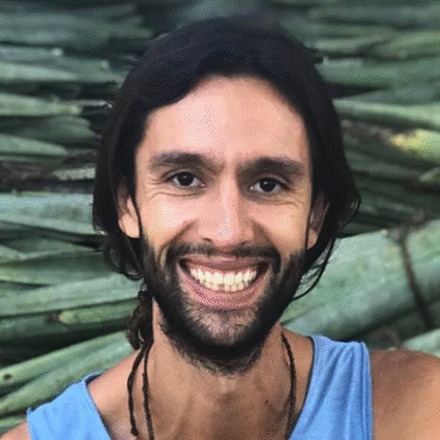
JP lived with chronic pain for decades and has mostly overcome it. He doesn't think in pictures either, so nothing here asks you to visualise.