

Articles
Meditating with aphantasia
Yes — you can meditate with aphantasia. Meditation does not require mental pictures. If guided tracks keep asking you to “imagine a beach” or “picture the tension melting,” the problem is usually the script, not your capacity to sit, breathe, and settle.
In this article
- When guided meditation assumes a picture
- What your nervous system actually needs
- Our non-visual approach: regulation without the inner movie
- JP’s short version (lived, not theoretical)
- A simple non-visual sit (try this for two minutes)
- What progress can look like (without an inner image)
- Clear next step (free and low-pressure)
This article is for people who cannot visualize (or visualize weakly), and for anyone whose body tightens when a practice depends on an inner movie. It is written from Chronic Conditions Clinic’s coaching approach, led on the aphantasia side by JP, who has aphantasia himself.
When guided meditation assumes a picture
A huge share of popular meditation language is visual by default:
- “Picture a safe place.”
- “See the breath as light.”
- “Watch the sensation change color.”
- “Imagine yourself calm.”
If nothing appears behind your eyelids, those lines can feel empty, fake, or oddly stressful. Some people blame themselves for “not trying hard enough.” Others quit meditation altogether. Neither reaction means mindfulness is closed to you. It means you were handed a visualization exercise wearing a meditation label.
The same split shows up in “body scans.” One version asks you to notice real sensation — temperature, pressure, contact, or even no sensation at all. That version works without imagery. Another version asks you to picture warm light pouring through the body or to watch tension drain as a color. Same name, different practice. If the second kind never landed, nothing is wrong with your awareness. You were given the wrong tool.
What your nervous system actually needs
At Chronic Conditions Clinic we work from a simple order: regulate the body before processing. When pain, anxiety, fatigue, or tension have kept a nervous system on alert, the first job is often to help that system feel a little safer in real time — not to force insight, and not to force a picture.
For aphantasia, that usually means skipping the inner screen and using channels that are already online:
- Felt sense / interoception — warmth, coolness, tightness, buzz, heaviness, the simple weight of your body in the chair.
- Breath as movement — ribs expanding, air at the nostrils, belly rising and falling. Feel it; don’t invent an image of it.
- Sound — the room, distant traffic, the hum of a fridge, your own exhale. Let sounds arrive and pass without turning them into a scene.
- Proprioception and contact — feet on the floor, back against the seat, hands resting on fabric. Orientation to the real room.
- Small movement — a shoulder roll, a shift of weight, Clinical Somatics–style micro-movements, or gentle standing work when stillness makes symptoms louder.
None of that requires a mental photograph. All of it can train attention the way meditation is supposed to: gently, repeatedly, in the present.
Our non-visual approach: regulation without the inner movie
In our aphantasia work, JP leads our non-visual approach. Instead of building safety as an imagined landscape, you build it with anchors you can actually perceive — touch, breath, sound, sight with eyes open, space, and the room around you. Each sense is a different door in. You use the doors that work for your system.
That matters when classic “close your eyes and picture…” scripts make pain or anxiety louder. Eyes can stay soft or open. Attention can bounce briefly to a sensation and back to a real anchor. If going inward spikes symptoms, movement, breath, or voice can carry the regulation instead of silent stillness.
This is coaching and guided practice, informed by nervous-system ideas (including polyvagal framing) and adapted tools such as PRT and EAET so they do not depend on imagery. It is not therapy, medical treatment, or a claim to cure aphantasia or chronic pain. It can sit alongside care you already have with qualified clinicians.
JP’s short version (lived, not theoretical)
JP has aphantasia. For years he didn’t have a name for it — he just knew he worked differently. When chronic pain took over, every promising nervous-system tool seemed to start with “picture this.” So he kept troubleshooting toward what he could use: movement, breath, sound, and touch, until his body started to listen. That troubleshooting is the backbone of our non-visual approach, explained on our aphantasia page.
We are not citing a clinical trial here. We are naming a lived pattern many aphantasic clients already recognize: when the cue stops demanding a picture, practice becomes possible again.
A simple non-visual sit (try this for two minutes)
- Sit or stand somewhere you feel reasonably supported. Eyes open or soft — your choice.
- Notice two or three real contact points (feet, seat, hands). Name them in plain words: pressure, warmth, fabric.
- Take three unforced breaths. Track only the physical movement of the breath — no beach, no light, no color.
- Pick one sound in the room and let it be there without fixing it.
- If attention wanders, return to contact or breath. Wandering is normal; returning is the practice.
If at any point symptoms spike, stop or switch to gentle movement. Regulation first. You are allowed to change the plan mid-practice.
What progress can look like (without an inner image)
Progress is not a clearer mental movie. It often looks quieter and more ordinary:
- It is easier to return to breath or contact after a distraction.
- Guided tracks that skip imagery feel usable instead of alienating.
- Brief noticing of sensation does not automatically mean danger.
- You have a few reliable anchors for hard days — a hand on the sternum, feet on the floor, a familiar sound.
That is enough. Meditation with aphantasia is still meditation when attention rests in sensation, sound, and presence.
Two related reads: what somatic tracking looks like without pictures, and why “picture a safe place” can backfire with anxiety and chronic pain.
Clear next step (free and low-pressure)
If you want support shaped for a non-visual nervous system:
- Read the hub: Non-visual regulation for aphantasia — includes who it’s for, how our non-visual approach works, and free practice starting points.
- Book a free 30-minute consult (limited spots). No pitch required; it’s a fit conversation about what you’ve tried and whether this coaching approach makes sense.
- If you already know you want ongoing private work, international sessions are available roughly from about $100 / 60 minutes (regulation-focused) or about $150 / 90 minutes (deeper processing). A premium membership option exists for people who want about six hours of private 1:1 time per month (about $750/mo). The free consult and free practices stay available either way — there is no obligation to buy.
You did not fail meditation. You may simply need cues that match how your mind and body actually work.
We've been where you are.
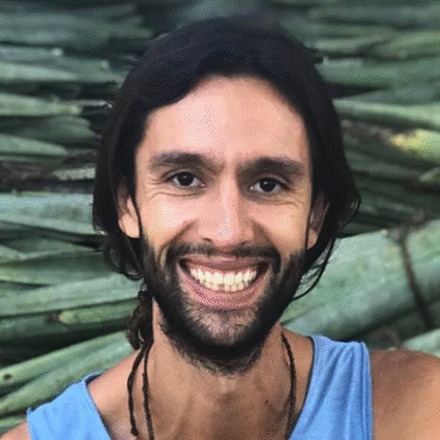
JP lived with chronic pain for decades and has mostly overcome it. He doesn't think in pictures either, so nothing here asks you to visualise.